

Category — Brazil
Calls grow louder for Brazil to tackle illegal logging
Illegal logging is a problem across the world but Brazil's place as one of the largest providers of industrial timber on the globe, along with its incredible biodiversity, put it in prime position to lead the fight against the problem.
Illegal logging undermines the steps that the industry is taking towards improving the sustainability of timber. Schemes such as ours are helping to provide a long-term solution, both to the growing worldwide demand for timber and the need to protect the rainforest.
However, there is only so much we can do. Governments and international authorities need to step up to take the lead on battling illegal logging if legal timber producers are to stand a real chance against companies that are providing illegal products for much cheaper prices.
There has been a certain amount of progress towards this goal, in which satellite data has played important role, tracking deforestation and monitoring who is removing sections of the forest and where.
But we need the Brazilian government to step up around the world and go further with its existing plans. Crucially, we require transparency between departments and in the law. Bureaucracy issues need to be tackled and the current tax system, which favours smaller businesses by providing them with lower rates, needs to be re-evaluated to ensure that businesses have a vested interest in operating within the law.
Brazil remains one of the biggest producers of timber in the world, with 2012 exports worth around $2.36 billion US dollars, according to the Tropical Timber Organisation. Its unique position gives the country a responsibility to step up and do everything within its power to squash those taking advantage of the country's natural bounty. When illegal logging, and the cheap would that it results in, is no longer an option, sustainable forestry will stand a genuine chance as the market grows.


September 30, 2013 No Comments
Research hints at growing demand for ecological products
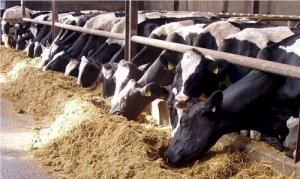
Research hints at growing demand for ecological products
Simply pushing more laws with no grounds or alternative offered to support ongoing economic growth will not provide a solution to deforestation. We've long known that the key to long-term reduction of deforestation in the Amazon and elsewhere is to look at and adapt market demand.
A recent survey has offered new support to this financially-driven approach to change forestry management. Published in Tropical Conservation Science, the study was conducted by Nathalie Walker and Sabrina Patel of the National Wildlife Federation, and Kemel Kalif of Amigos da Terra – Amazonia Brasileira.
The survey, reported by MongaBay, found that the vast majority of leather products produced from Brazilian cattle and exported, end up in markets that "could be considered to be susceptible to demand for deforestation-free products". In fact, as much as 85 per cent of leather production in the country serves markets that are potentially sensitive to environmental issues, while about 40 per cent of beef heads to such destinations.
We're pleased to see a growing level of awareness of the issues surrounding deforestation and Brazil's massive cattle industry, particularly as the country's economy continues to go from strength to strength in preparation for the 2014 World Cup.
The researchers underlined the importance of this trend of ever increasing awareness surrounding the issues relating to cattle production in areas of Brazil, stating: "Consumer concern in Brazil over deforestation related to the cattle industry is vital for sustained and increased action in the industry to reduce deforestation."
But while it's useful to have the proof of such trends uncovered through research, the market has already become aware of the changing attitudes with regards to deforestation. In 2009, four major meatpackers signed a moratorium on deforestation for cattle production, after a Greenpeace report linked Amazon deforestation to major Western brands, forcing the companies to change their ethos or risk losing lucrative export contracts.
Not all of the cattle industry in the Amazon region has committed to working together with the forest, but the change is substantial and, alongside projects like ours, will go a long way to cutting the rate of deforestation in the area.
September 3, 2013 No Comments
Sustainable development requires holistic approach

Sustainable development requires holistic approach
Brazil has seen a massive increase in its output in recent years. Its burgeoning middle classes have driven record levels of consumer demand and a healthy export market has added to the pressure on raw materials, including timber.
But it is partly its access to such plentiful resources that has allowed Brazil to expand in the first place. The hunt is now on for a way of allowing this expansion to continue at a sustainable level that doesn't damage the balance for future generations.
The ultimate solution will be a holistic approach to the situation. With so many factors and issues to take in to account, the country needs to focus on providing long-term solutions for all parties, instead of looking at the matter from a purely economic point of view.
Sustainable forestry has a key role to play in this but its success can't be entirely government-driven. Fortunately, there is a market-driven alternative in the form of sustainably managed forestry investment. In addition to this, Brazil's indigenous populations are finding their own way of reforesting previously barren areas of land, while also adapting to live in a way that profits both themselves and their land.
The Dedicated Grant Mechanism for Indigenous Peoples and Local Communities (DGM), funded by the Climate Investment Funds (CIF), has played an important role in contributing towards local people's efforts, as has the World Bank's help in implementing such schemes.
But on a larger scale, demand for raw materials is making it imperative that businesses start using sustainably sourced materials. This requires action on the part of bigger enterprises and organisations but can be driven by relatively small scale investment in projects such as Greenwood's sustainable plantations in Brazil.
The country is going through an enormous period of upheaval, but we remain optimistic that it will eventually identify a route that can provide for its future without damaging its impressive natural heritage.
August 5, 2013 No Comments
Brazil confirms near five-fold increase in deforestation
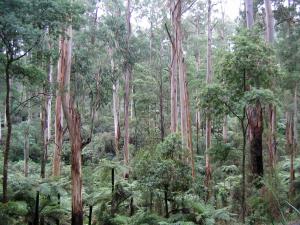
Brazil confirms near five-fold increase in deforestation
The latest data from Brazil's National Space Research Institute (INPE) has uncovered a worrying reversal in the country's trend towards reducing deforestation.
Efforts from companies like Greenwood and other businesses motivated by the need to create a sustainable growth model for the region, have been helping to drive down the rate of deforestation in the Amazon over recent years. But the latest statistics show that the rate has crept up over the past 12 months.
The data showed a nearly five-fold increase in forest loss during May 2013 in comparison to the same month in 2012. The satellite data revealed nearly 465 sq km of deforestation over the course of the month.
It's true that this figure is small in comparison to earlier years when Brazil's rapid economic expansion resulted in a huge amount of deforestation. Rising prices for agricultural produce increased the rate at which people cut down forest to use the fertile land for crops such as soybeans. Economic growth also increased demand for timber and the slow introduction of regulation meant that the forest was ripe for exploitation.
While the data isn't wholly accurate due to allowances that need to be made for cloud coverage, other reports have indicated a similar trend, suggesting that something needs to be done quickly to catch the reversal before it takes hold.
A report from Imazon, an NGO based in Brazil, showed an 89 per cent increase in deforestation between August 2011 and May 2012 when 873 sq km were lost, and August 2012 and May 2013 when 1,654 sq km were lost.
Brazil accounts for more than 60 per cent of the Amazon rainforest and has recently been a leader in reducing deforestation. Greenwood's efforts have gone someway to help this but we can only do so much; what is really needed is a long-term change in attitudes towards the rainforest in order to protect this vital resource.
July 8, 2013 No Comments
Decrease in deforestation drives drop in Brazil's emissions
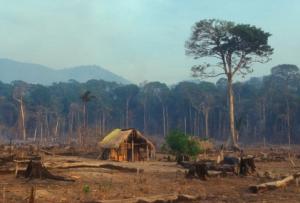
Decrease in deforestation drives drop in Brazil's emissions
A decrease in deforestation in the Amazon has driven a sharp drop in Brazil's greenhouse gas emissions in recent years, a Government study has claimed.
Emissions fell by 39 per cent between 2005 and 2010, the Government inventory stated. Greenwood was glad to see that a decline in deforestation rates contributed significantly to the drop in emissions, with analysis suggesting a 76 per cent drop in cumulative emissions from deforestation over the five-year period. This included improved forestry management techniques in the Amazon and the surrounding savannahs.
We are pleased to see that while the Brazilian Government has acknowledged that emissions are “still a very serious issue” and has vowed to tackle the problem even thought it is not going to be “a simple task” to keep the levels falling as urbanisation continues and wealth and industry spread.
Unfortunately, the forestry industry can only do so much to improve the situation. The level of greenhouse gases decreased by around ten per cent between 1990 and 2010, with 1.25 billion tonnes of carbon dioxide emitted in 2010. However, this figure started to increase again slightly towards the end of the decade, with the recorded 2010 emission level slightly higher than that of 2009.
The rainforests across the country will have a powerful role to play in helping the country to cut its emissions. Fortunately, Brazil is already well on its way to reducing deforestation and protecting its valuable natural assets. In 2010, deforestation accounted for just 22 per cent of the country's total emissions; a significant change from earlier years when tree felling clocked up around two thirds of the country's greenhouse gas output.
This leaves the other sectors fighting to catch up. Agriculture, for example, now takes the largest share of the country's greenhouse gas output and emissions from this sector rose by 5.2 per cent between 2005 and 2010.
Energy is also proving to be a problem as Brazil requires more energy and the demand starts to push people into new areas of land in an attempt to supply more energy.
June 10, 2013 No Comments
Deforestation of Brazilian forests present a no-win situation
Deforestation of Brazilian forests present a no-win situation
Sustainable forestry plantations are needed more than ever in Brazil in order to maintain the productivity of the country's land. In fact, the country's agricultural economy has little option but to cut down on deforestation if it is to maintain Brazil's fertile ground and high rates of productivity.
A recent paper from Brazilian and US scientists, published in the journal Environmental Research Letters, has predicted significant drops in the country's agricultural productivity if current levels of deforestation continue.
The study warned: “The more agriculture expands in the Amazon, the less productive it will become.” The next statement in the paper is worth paying particular attention to: “In this statement, we all lose.”
We've built our business on the very concept that nobody should have to lose out in order for a forest to be profitable. We have established plantations around Brazil that have sustainability built into their ethos in order to tackle this issue, but studies like this are sorely needed to push sustainable forestry plans and other alternatives to excess deforestation.
Failing to tackle the issue will bring some serious risks, not only for the global environment, but for Brazil's own economic development. Based on existing trends of deforestation, the loss of carbon sequestration and related feedbacks on biomass, temperature and rainfall mean that a 34 per cent fall in pasture productivity is predicted for 2050. Soya bean yields, one of the most profitable crops in Brazil, are also predicted to drop by 28 per cent over the same time period.
Given that one of the major drivers for deforestation is the clearing of land for agriculture, the news that doing so is damaging yields is clearly an issue that needs to be tackled soon. The report observed: “It was a surprise to us that high levels of deforestation could be a no-win scenario – the loss of environmental services from the deforestation may not be offset by an increase in agricultural production.”
May 13, 2013 No Comments
Brazilian economy holds steady

In a positive sign for investors, economic growth in Brazil is again looking steady. Brazilian GDP levelled at growth of 0.9 per cent in 2012, according to the Brazilian Institute of Geography and Statistics (IBGE). This follows growth of 2.7 per cent in 2011 when the country overtook the UK to become the sixth-largest economy in the world.
We were expecting a slightly higher level of growth last year given the 4.5 per cent expansion prediction that came at the start of the year. But in the long run a steady rate of growth should be more beneficial to investors and the country as a whole; giving Brazil time to consolidate its infrastructure following a fast period of expansion.
Mark Williams of Capital Economics spoke to the BBC about the situation: “For Brazil, the issue is that consumer spending, which for years was the driver of growth, can no longer continue to increase at rapid rates.
“Brazilian households spend roughly a fifth of their income servicing debt - far more than over-leveraged US households did before the financial crisis. This debt burden has understandably started to take a toll on their spending.”
But to give us a bit of solid confidence in the economy’s return to growth, Brazil has also posted some good industrial stats this week. The country’s industrial production figures grew by 2.5 per cent month-on-month. Capital goods were leading the way with an 8.2 per cent gain over the month, compared to a 0.1 per cent contraction in December.
These economic and industrial improvements are continuing to feed demand down to our plantations where we’re poised to meet the ongoing need for sustainable resources in Brazil and abroad.
February 28, 2013 No Comments
Building homes and futures
If you follow our blog you’ll know by now that our work ties in closely with the Brazilian government’s policies regarding sustainable forestry and the environment.
Recently we’ve spotted some more coincidences between our plans and those of Dilma Rousseff. Honestly, it’s like she’s copying us. Housing, for example, is a key topic being looked at by the government at the moment through its My House, My Life programme. Following this plan, Brazil hopes to have built 2.4 million new homes by 2014, going some way to helping out the seven million families in the country that are currently without adequate housing.
Great news and good luck to them, but how exactly does this tie in with Greenwood’s plans you might ask. Here’s how, so listen up. Greenwood’s latest Acacia Mangium Project, located in Bahia State, is all about Acacia Mangium, a top-grade, durable hardwood, ideally suited to furniture making and the construction industry.
We’re already running and managing a number of different acacia plantations across Brazil’s Western and Central Bahia regions, but this latest project will provide a significant boost to our supply, allowing Greenwood and its investors to meet the growing demands for wood generated by the My House, My Life programme.
Our supplies of wood are right in the heart of Brazil, just where they are needed, so our freight and logistics costs can be kept low. Greenwood also has its own wood-processing center, so we can push our efficiency savings that bit further and pass these on to the government and its low-cost housing schemes.
We love it when a plan comes together and Greenwood as a whole is looking forward to playing its part in facilitating Brazil’s ongoing economic improvements.
For more information, please read our press release on the Acacia project.
October 19, 2012 No Comments